If your car is struggling to crank, your headlights look dim at idle, or you see a “bloated” battery case, your battery is likely a victim of the Dubai summer. In the UAE, the combination of extreme heat and high humidity accelerates chemical evaporation inside the battery.
Most batteries in Dubai last 18 to 24 months—far less than the 5 years seen in cooler climates. If you’re seeing the “Battery Warning Light” or hearing a clicking sound when turning the key, skip the jump-start and head to a trusted Al Quoz garage immediately.
5 Signs Your Car Battery is Dying in Dubai
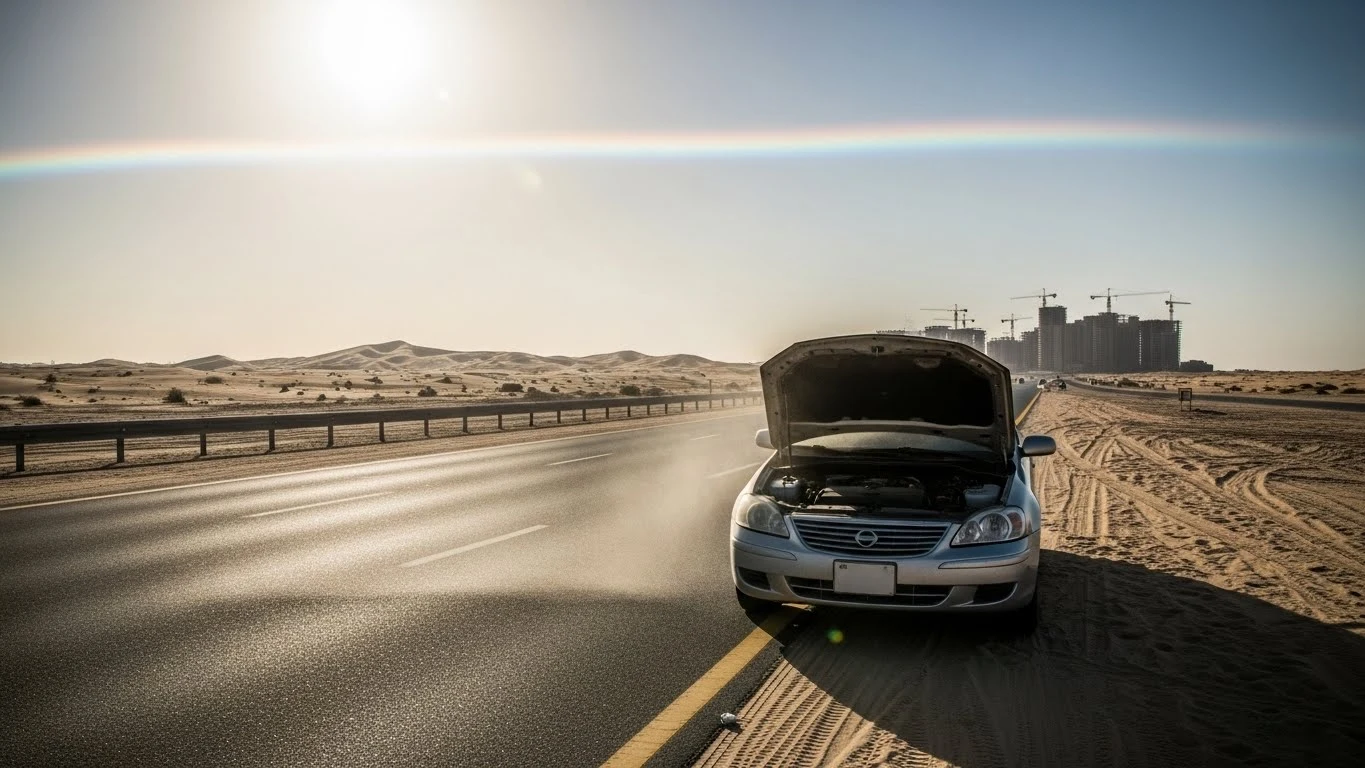
The Reality of Driving in 50°C: Why Dubai is a Battery Killer
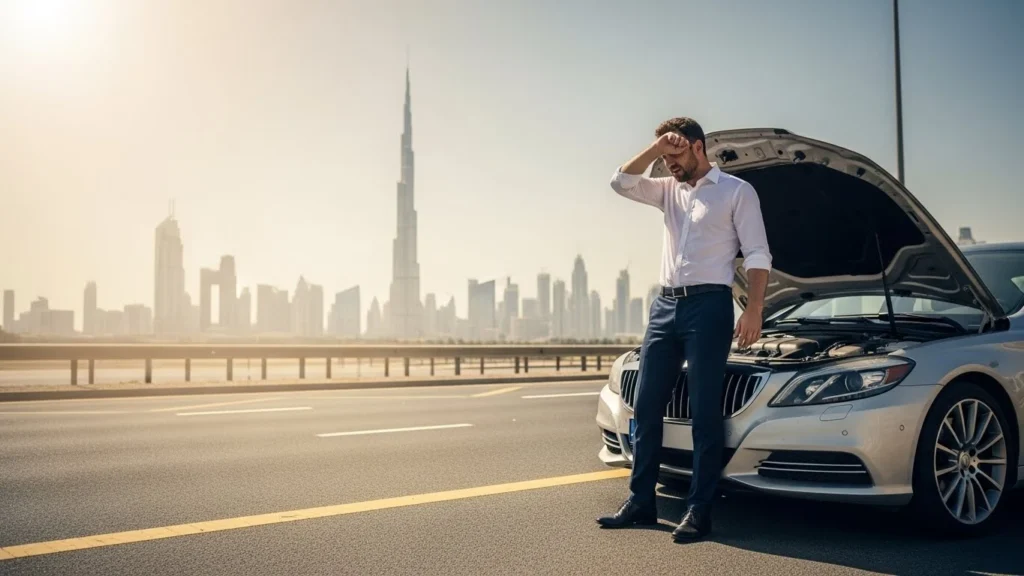
It happened again. You finished your shift in DIFC, walked to the parking lot in 48°C heat, and pressed the start button. Nothing. Just a pathetic click-click-click.
I’ve seen this a thousand times at our workshop. Dubai drivers often feel betrayed by their cars, especially when it’s a high-end Mercedes or a reliable Land Cruiser. But here’s the truth: your battery isn’t just a power cell; it’s a chemical reactor.
When the mercury hits 50°C, the liquid electrolyte inside your battery evaporates. This leads to internal corrosion. By the time the “winter” months arrive in December, the weakened battery simply doesn’t have the “cold cranking amps” (CCA) left to turn the engine.
We are currently seeing a massive spike in battery failures this month. With the recent RTA humidity warnings, the moisture in the air is also causing faster terminal oxidation. It’s a perfect storm for your electrical system.
If you notice any of the 5 Signs Your Car Battery is Dying in Dubai mentioned in this guide, don’t wait for a roadside emergency. Speak with our certified technicians immediately for a professional diagnostic. Message us on WhatsApp for instant support.
The Science: How Heat and Salinity Destroy Your Power
Most people think cold weather kills batteries. That’s a myth for the Northern Hemisphere. In the UAE, heat is the assassin, and the cold only delivers the final blow.
Internal temperatures under a car hood in Dubai can reach a staggering 75°C to 80°C while stuck in traffic on Hessa Street. This heat causes the lead plates to warp. It also speeds up the chemical reaction, leading to overcharging.
If you live in Jumeirah or Dubai Marina, you have an extra enemy: coastal air. The high salinity in the air near the Arabian Gulf promotes “bridge” formation between terminals. This creates a tiny, constant electrical leak that drains your battery overnight.
5 Signs Your Car Battery is Dying in Dubai
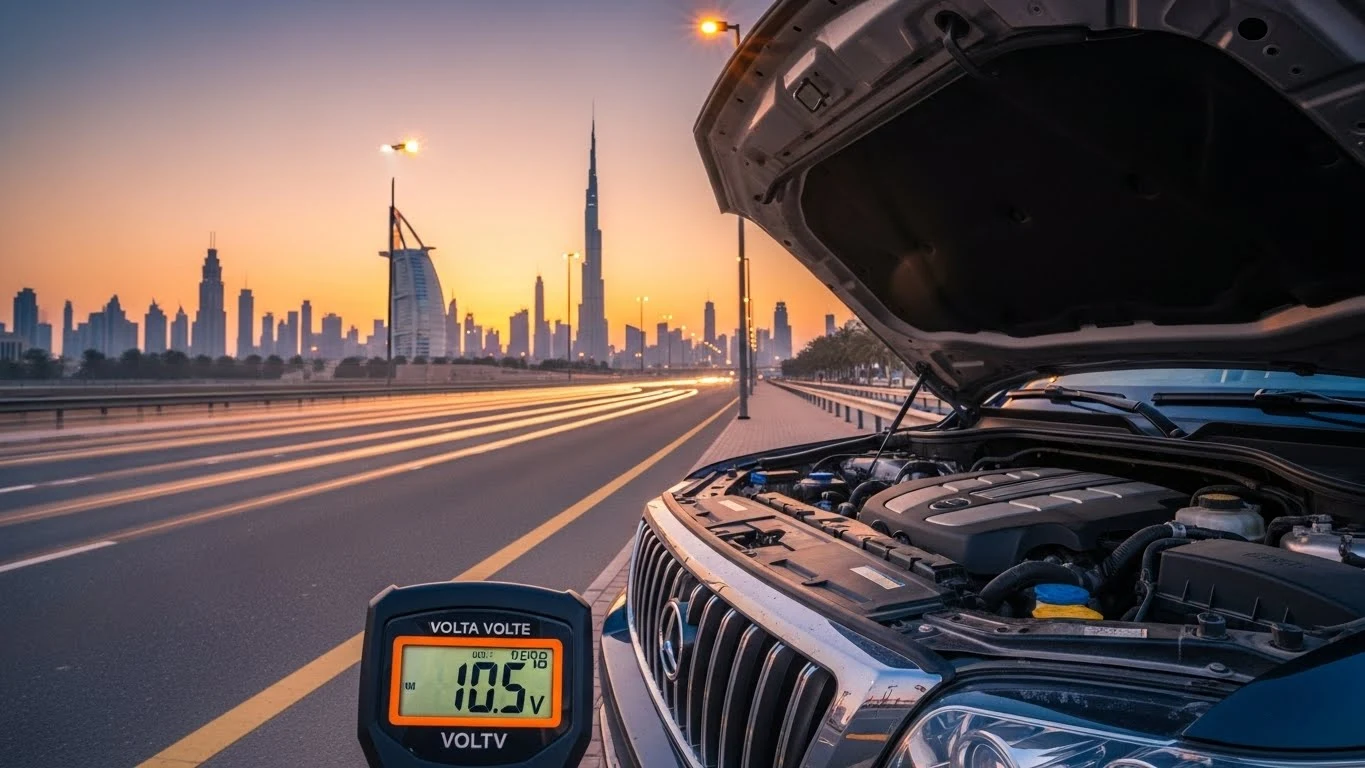
1. The “Slow Mo” Engine Crank
This is the most common early warning. When you press the ignition, the engine sounds like it’s struggling to wake up. It grumbles and turns over slowly. In our experience, once this starts, you have about 3 to 5 days before total failure.
2. The Bloated or Swollen Battery Case
Open your hood. Does the battery look like it’s had too many Shawarmas? Extreme heat causes the battery casing to swell or bulge. If the sides are no longer flat, the internal components are damaged. This is a “replace immediately” situation.
3. The “Rotten Egg” Smell (Sulfur)
If you catch a whiff of something foul—like sewage or rotten eggs—near the front of the car, your battery is leaking gas. This happens when a battery is overcharged by the alternator or damaged by heat. This gas is corrosive and can damage your engine bay.
4. Dim Lights and Electrical Glitches
Modern cars in Dubai are rolling computers. If your dashboard lights flicker, your power windows move slowly, or your infotainment screen resets randomly, the battery is failing. It can no longer maintain a steady voltage for the car’s “brain.”
5. The Infamous Battery Warning Light
Don’t ignore the little red rectangle on your dash. While it can sometimes mean an alternator issue, in 80% of the cases we see in Al Quoz, it’s the battery signaling it can no longer hold a charge.
Are you experiencing any of the 5 Signs Your Car Battery is Dying in Dubai? Protect your vehicle from the extreme UAE heat by consulting our experts today. Click here to Call us for instant support.
Brand Specifics: How Different Cars React to the UAE Heat
| Car Origin | Typical Battery Life | Common Symptoms |
| Japanese (Toyota/Nissan) | 24 Months | Sudden death; no warning, just won’t start one morning. |
| European (BMW/Audi/Merc) | 18-22 Months | Complex “Limp Mode” or strange sensor errors on the dash. |
| American (Ford/GMC) | 20 Months | Heavy dimming of headlights and AC compressor lag. |
Japanese cars often use smaller batteries to save weight, which means they have less “reserve capacity” when the heat hits. European cars are packed with electronics that stay active even when the car is off, putting a massive “parasitic drain” on the battery during the summer.
The Solution: DIY Fixes vs. Professional Help
The “Quick Clean” DIY Guide
If you see white, ashy powder on your battery terminals, that’s corrosion. Here is how to fix it:
-
Mix a tablespoon of baking soda in a cup of warm water.
-
Disconnect the negative terminal first, then the positive.
-
Scrub the terminals with an old toothbrush dipped in the solution.
-
Dry everything thoroughly and reconnect.
When to Call the Pros
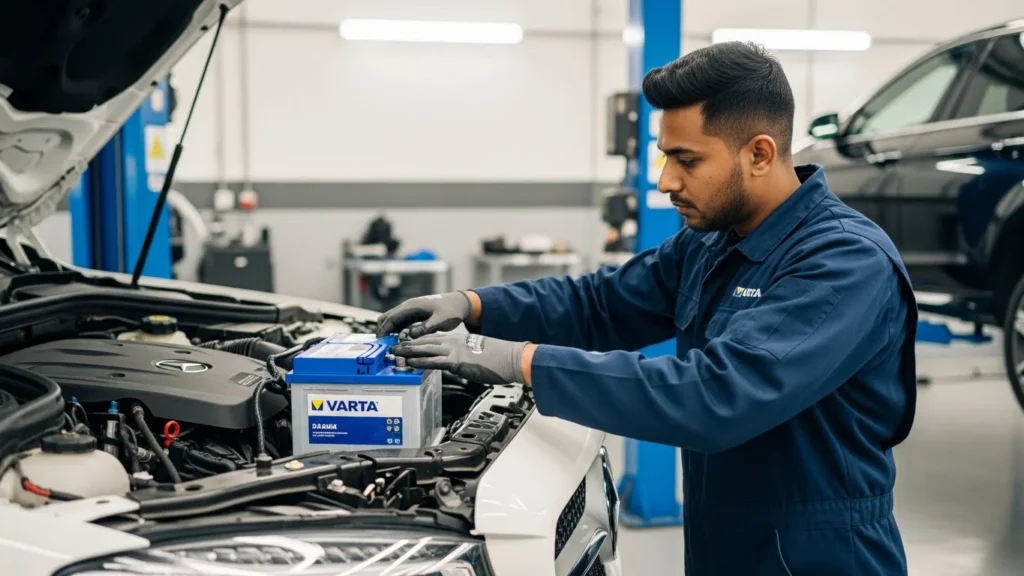
If your battery is over two years old, DIY cleaning is just a bandage. You need a load test. A professional Al Quoz garage uses a conductance tester to see if the internal plates can still handle the “crank load.”
Genuine OEM vs. Aftermarket: The UAE Market Guide
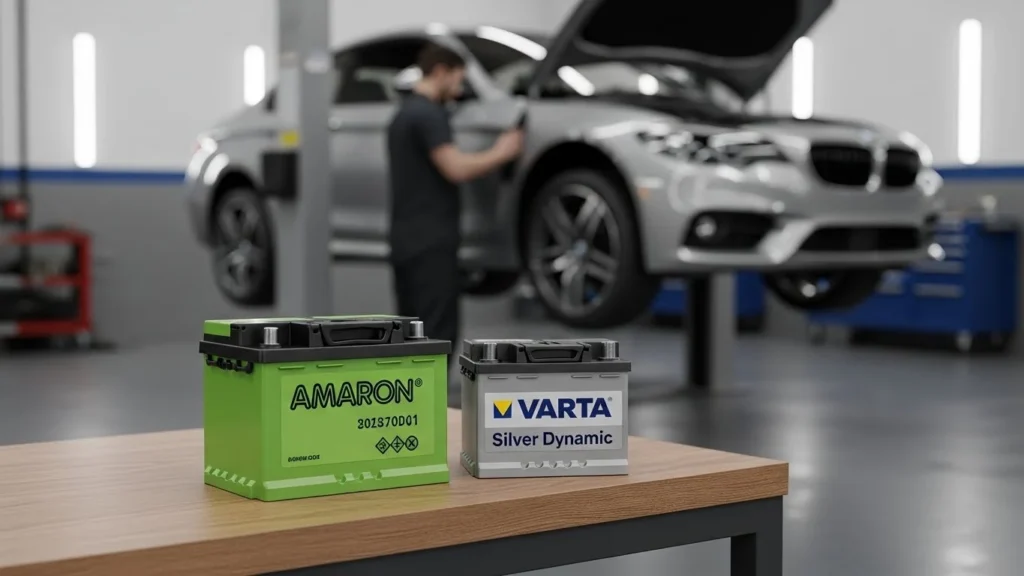
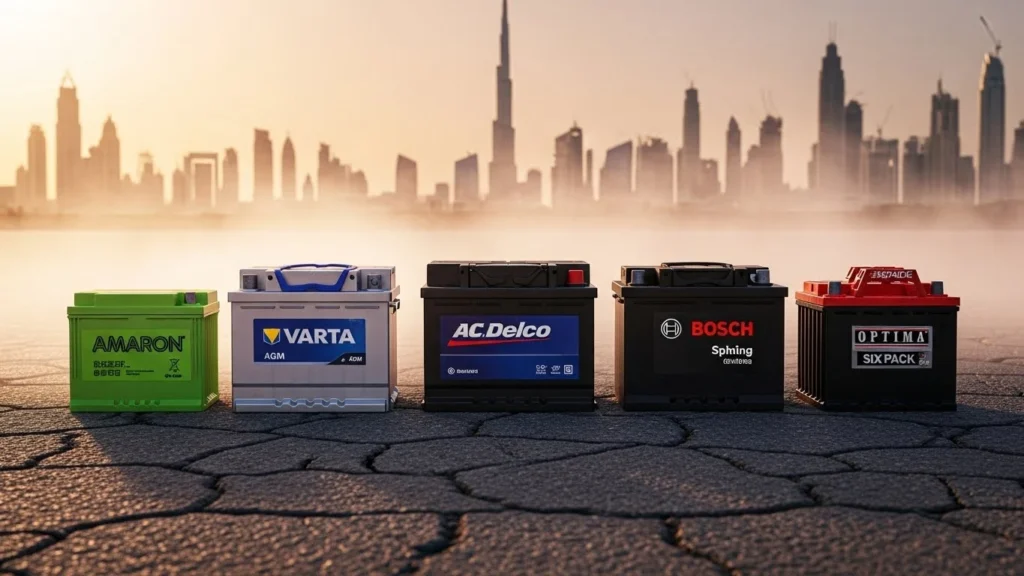
In Dubai, you’ll find everything from premium German brands like Varta to local or regional brands.
-
Genuine OEM: Usually the safest bet for luxury cars. They often come with a 12-month warranty.
-
Aftermarket (AGM): Absorbent Glass Mat (AGM) batteries are superior for Dubai. They handle heat much better than standard “flooded” batteries.
-
Dry Cell vs. Wet Cell: Always opt for “Maintenance Free” (sealed) batteries in the UAE. You don’t want to be topping up battery acid in this humidity.
Case Study: The “Ghost in the Machine” in Dubai Hills
Last July, a client brought in a 2021 Porsche Cayenne. The owner complained that the GPS kept losing its position and the start/stop feature stopped working. He thought it was a software bug.
After a 5-minute diagnostic, we found the battery was putting out 11.2 volts instead of 12.6. The heat had killed one of the cells. A simple battery replacement solved all the “software” issues. In Dubai, a weak battery causes “ghost” problems that look like expensive mechanical failures.
The 15-Point Dubai Summer Battery Checklist
-
Check the age: If it’s over 18 months, be on high alert.
-
Visual Inspection: Look for leaks or bulging.
-
Terminal Tightness: Vibrations from desert driving can loosen them.
-
Clean Corrosion: Keep those terminals shiny.
-
Park in Shade: Use basement parking whenever possible.
-
Insulation Kit: Ensure your battery’s heat shield is intact.
-
Short Trips: Avoid only driving 5 minutes; the alternator needs time to recharge the battery.
-
Turn off AC first: Don’t start the car with the AC on “Max.”
-
Unplug Dashcams: Some drain power while the car is parked.
-
Check the Alternator: Ensure it isn’t overcharging.
-
Drive Weekly: Don’t let the car sit at DXB airport for 3 weeks.
-
Voltage Test: Should be 12.6V (off) and 13.7V-14.7V (running).
-
Listen for Clicking: That’s the starter solenoid begging for power.
-
Check Ground Wires: Salt air can corrode the “Earth” connection.
-
RTA Compliance: Ensure the battery is secured; a loose battery fails ‘Taj deed’.
Maintenance & Cost Table (AED Estimates)
| Service / Part | Cost (AED) | Frequency | Recommendation |
| Standard Battery | 350 – 600 | Every 2 Years | Good for Toyota/Nissan |
| AGM Battery | 800 – 1,500 | Every 3 Years | Best for BMW/Mercedes |
| Battery Load Test | 50 – 100 | Every 6 Months | Essential before Summer |
| Terminal Cleaning | 50 – 75 | Every 6 Months | Prevents voltage drops |
RTA & Legal Compliance: The ‘Tajdeed’ Factor
During your annual RTA vehicle inspection, a loose battery or a leaking one is a “Major Failure.” The inspectors check for the “Battery Hold-down.” If your battery is vibrating or unsecured, you will fail your registration renewal. Furthermore, a leaking battery is considered an environmental hazard.
Final Insights from Our Head Mechanic
The Insider Secret: Most people think the “Battery” light means the battery is dead. Here is the secret: If that light stays on while you are driving, your alternator has probably failed. If you keep driving, the car will die in the middle of the road within minutes. Switch off the AC, radio, and ventilated seats immediately to save every drop of power to get to a safe spot.
Frequently Asked Questions (Dubai Edition)
Q: Can I jump-start a modern car in Dubai heat?
A: Yes, but be careful. Modern European cars have sensitive ECUs. Always connect the negative to a metal ground on the frame, not the dead battery’s negative terminal.
Q: Why does my battery die faster in Jumeirah?
A: The salt air from the coast accelerates terminal corrosion and can create “parasitic draws” across the top of the battery.
Q: Is it okay to use a higher-amp battery?
A: As long as the voltage is 12V and it fits the tray, a higher Amp-Hour (Ah) rating is actually better for the Dubai summer.
Q: Does the car warranty cover the battery?
A: Most UAE dealerships cover the battery for only the first 12 months, as it is considered a “wear and tear” item.
Q: Can I leave my car at the airport for a month?
A: In the Dubai summer? It’s risky. Use a high-quality battery maintainer or have a friend start it once a week.
Q: Should I top up my battery with tap water?
A: NEVER. Use only distilled water if your battery isn’t a “Maintenance Free” type. Tap water contains minerals that will ruin the cells.
Q: Why did my battery die right after the rain?
A: Humidity and water can cause short circuits in already weakened battery terminals.
Q: Is a “Dry Cell” battery better for Dubai?
A: Yes, sealed AGM (Dry Cell) batteries handle the vibration and heat of UAE roads much better than standard lead-acid ones.