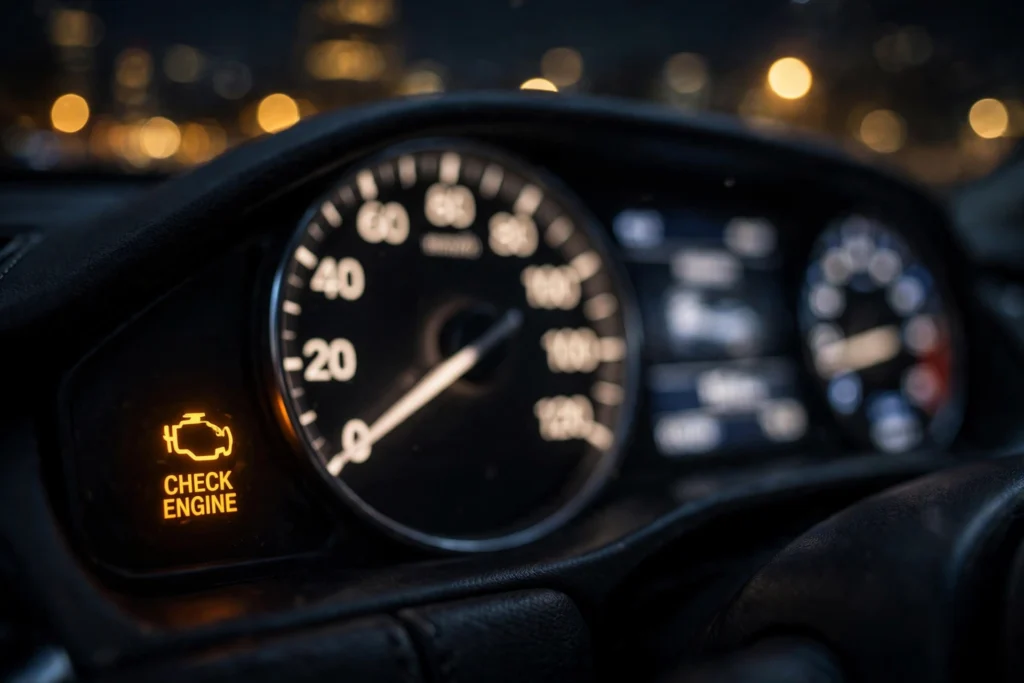
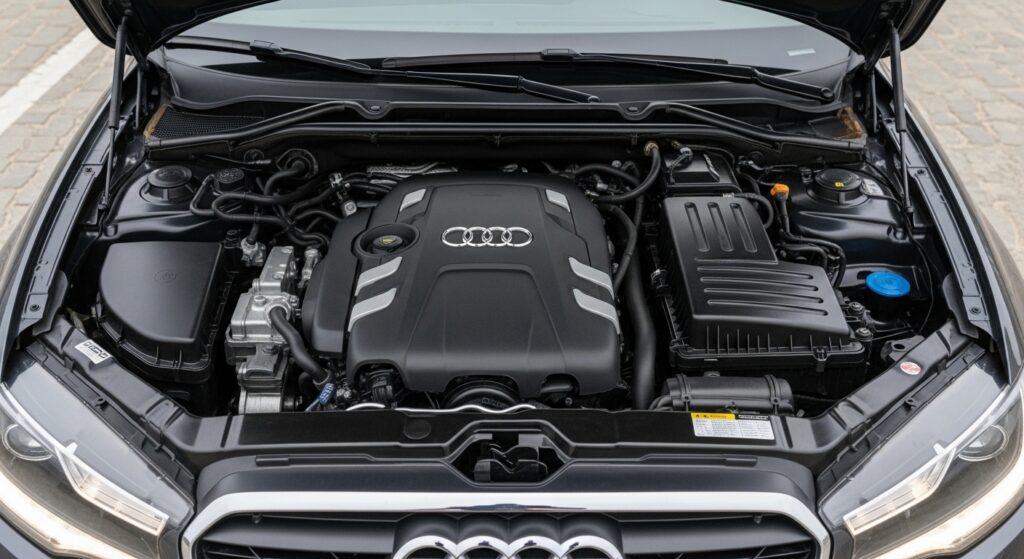
Few dashboard sights worry a driver like the temperature gauge climbing past the middle. Audi engines run hot by design, and Dubai summer gives their cooling systems very little margin. The good news: most Audi overheating problems come from a short list of known causes, and almost all of them are fixable before they damage the engine, if they are caught early.
If your Audi’s temperature is rising now, stop reading and stop driving as soon as it is safe. Then call or WhatsApp Expert Car Repair Dubai on +971 56 937 1471.
Why Audis Overheat in Dubai Summer
1. Coolant leaks from plastic parts
Many Audi cooling systems use plastic thermostat housings, water pump housings, and pipework. Years of heat cycles make plastic brittle, and small cracks become leaks. The coolant level drops slowly, the system loses pressure, and one hot afternoon the temperature climbs. A low coolant warning weeks earlier is often the first clue.
2. A failing water pump or thermostat
The water pump pushes coolant around the system; the thermostat controls when it flows through the radiator. A thermostat stuck partly closed, or a pump with worn internals, may cope in winter and fail the car in July. On several Audi engines the pump and thermostat live together, so they are often inspected as one job.
3. Electric fan problems
At speed, air through the radiator does the cooling. In traffic, the electric fans do everything. A worn fan motor, a failed fan control module, or a fan that only runs on one speed will show up exactly where Dubai drivers spend their time: at idle, in queues, with the AC on. This is also why an overheating Audi often has weak AC at the same time; the two systems share the same fans. Our article on car AC not cooling in traffic covers that connection.
4. A clogged or damaged radiator
Sand and dust coat the radiator and condenser fins from outside; old coolant and corrosion narrow the passages inside. Either way, cooling capacity shrinks quietly until a very hot day exposes it.
5. Wrong or old coolant
Audi engines need the correct specification coolant, mixed correctly. The wrong type, or plain water top-ups over years, reduces boiling protection and corrodes the system from inside. Coolant is not a lifetime fluid, whatever the sealed-for-life claims suggest.
6. Head gasket trouble (the one to rule out)
Less common, but serious: a failing head gasket can push combustion gas into the cooling system or mix oil and coolant. Signs include white exhaust smoke, a milky residue under the oil cap, and coolant that disappears with no visible leak. This needs proper testing, not guesswork, which is what our engine diagnostics process is built for.

What To Do When the Temperature Gauge Rises
- Turn the AC off and the heater on full hot. It is uncomfortable, but the heater pulls heat out of the engine and can buy you a little time.
- Stop the car somewhere safe as soon as you can. An engine that fully overheats can warp or crack parts that turn a cooling repair into an engine rebuild.
- Switch off and wait. Do not open the coolant cap while the system is hot. It is under pressure and can spray boiling coolant.
- Do not pour cold water into a hot engine. The sudden temperature change can crack metal parts.
- Call for help. Driving on and hoping is how small cooling faults become engine damage.
How We Find an Overheating Fault
Overheating has many possible causes, so we test in order: pressure-test the cooling system to find leaks, check the coolant level and condition, test fan operation at all speeds, scan the car for temperature-related fault codes and live data, and check the thermostat and water pump operation. Only then do we talk about parts. Guessing with cooling systems is expensive, because changing the wrong part leaves the real fault in the car.
Keeping an Audi Cool Through Summer
- Check the coolant level monthly, and take any drop seriously. Coolant does not get used up; a drop means a leak.
- Keep the correct specification coolant in the system, changed on schedule.
- Have the radiator and condenser cleaned of sand and dust buildup.
- Never ignore the first temperature warning. In Dubai, the second one can be the expensive one.
- Service the car on time. Cooling checks are part of our car maintenance service, and summer is the wrong season to discover a weak fan.
Call or WhatsApp: +971 56 937 1471 | WhatsApp Us
Frequently Asked Questions
Why does my Audi overheat only in traffic?
Because at speed the wind cools the radiator, and in traffic the electric fans must do the whole job. A weak fan, a fan control fault, or a radiator coated in dust can all cope on the highway and fail at idle. Overheating that appears in traffic and disappears on the move points first at the fans and airflow.
Can I drive my Audi if the temperature is a little high?
A gauge slightly above normal is a warning to get the car checked soon, not to keep driving for weeks. If it keeps climbing, or the warning light comes on, stop as soon as it is safe. Continued driving with a hot engine risks head gasket and engine damage far beyond the original fault.
Why does my Audi keep losing coolant with no visible leak?
Common causes are a small leak that evaporates on hot parts before it can drip, a leaking cap that cannot hold pressure, or an internal leak such as a head gasket fault. A pressure test finds external leaks; further tests confirm internal ones. Coolant never disappears without a reason.
Is it true Audi water pumps fail early?
On several Audi engines the water pump and thermostat housing use plastic parts that age with heat, and Dubai heat ages them faster. Failure is not certain, but leaks and sticking thermostats from this area are among the most common overheating causes we see on Audis here.
What coolant should my Audi use?
The specification listed for your model, correctly mixed, and nothing else. Modern Audis use specific coolant standards, and mixing types or topping up with plain water for long periods causes corrosion and lowers boiling protection. If you do not know what is in your car, a coolant change to the correct specification is the safe answer.