Imagine you’re finished with a long day at the office in Business Bay. You walk to your car, the afternoon sun still baking the pavement at 45°C. You turn the key, and instead of the familiar roar of your engine, you hear a pathetic, soul-crushing click-click-click.
Here is the thing: in Dubai, a dead battery isn’t just an inconvenience. It’s a safety hazard. Standing outside for even ten minutes in our peak July humidity can lead to heat exhaustion. We see this every single day at our Al Quoz garage.
Quick Fix / TL;DR
In temperate climates, a car battery lasts 3 to 5 years. In Dubai, the average lifespan is 18 to 24 months. The combination of 50°C summer peaks, high electrical demand from your AC, and Jumeirah coastal air salinity creates a “triple threat” that causes internal corrosion and fluid evaporation.
Immediate Help
Stuck on the road right now? Don’t risk a breakdown in this heat. Message us on WhatsApp for immediate recovery or a mobile diagnostic.
How Long Do Car Batteries Last in Dubai
Why the UAE Heat is a “Battery Killer”
We often get asked why batteries that supposedly have a 3-year warranty fail just after 14 months. The science is simple but brutal. Lead-acid batteries rely on a chemical reaction between lead plates and an electrolyte liquid.
When your car sits in the sun at a Dubai mall parking lot, the temperature under your hood can easily hit 75°C. This extreme heat accelerates the chemical reactions inside the battery. While this might sound like it gives more power, it actually leads to “over-activity” that eats away at the internal grids.
Humidity effects also play a massive role. If you live near Dubai Marina or Jumeirah, the salt-heavy air promotes faster oxidation on your terminals. This creates resistance, meaning your alternator has to work twice as hard to push a charge back into the cells.
Desert driving adds another layer of stress. Fine sand particles can clog the battery’s vent caps. When the battery can’t “breathe,” internal pressure builds up, leading to the dreaded “swollen battery” look we see so often during our summer inspections.
8 Warning Signs Your Battery is About to Quit
Our veteran mechanics recommend looking for these symptoms before you find yourself stranded on the E11:
-
The “Slow Crank”: The engine takes 3-5 seconds longer to turn over than usual.
-
Flickering Dashboard: Your screen or gauges dim when you try to start the car.
-
The Rotten Egg Smell: This is a sign of leaking sulfuric acid or overheating.
-
Corrosion “Snow”: White, ashy powder building up on the metal terminals.
-
Swollen Casing: The battery looks bloated or misshapen from heat exposure.
-
AC Performance Drops: Your fans feel weaker at idle because the battery can’t stabilize the voltage.
-
Headlight Dimming: Your lights get brighter only when you press the accelerator.
-
The Infamous Dashboard Light: That red battery icon is often the final warning before total failure.
Noticing these signs? It’s better to be safe than stranded. Call our Al Quoz experts at +971569371471 for a precision health check today.
Brand Specifics: How Different Cars Handle the Heat
Not all cars are created equal when it comes to battery placement and cooling.
European Cars (BMW, Mercedes, Audi)
European manufacturers often place the battery in the trunk or under the rear seat. This is actually a blessing in Dubai. By keeping the battery away from the engine’s direct heat, these batteries often last closer to 30 months. However, they are highly sensitive to voltage drops and can trigger “limp mode” if the battery is even slightly weak.
Japanese & Korean Cars (Toyota, Nissan, Hyundai)
These are the workhorses of the UAE. Most have the battery right next to the radiator. While these engines are incredibly reliable, the batteries take a direct hit from the heat. In a Toyota Corolla or Nissan Sunny used for daily commuting, expect exactly 18-20 months of life.
American Cars (Ford, GMC, Chevrolet)
Big engines mean big starters. American SUVs require high Cold Cranking Amps (CCA). While they handle the heat well, the heavy electrical load of dual AC units and large infotainment screens can drain a battery fast if the alternator isn’t at 100% health.
The Solution: DIY vs. Professional Care
The DIY Approach
If you want to handle things yourself, start by cleaning your terminals every 3 months. Use a mixture of baking soda and water to neutralize acid buildup. Ensure the hold-down bracket is tight; vibrations from desert driving or speed bumps can crack the internal plates of a loose battery.
Professional Repair Advice
Modern cars in Dubai are essentially rolling computers. Many newer models (especially those with Start-Stop technology) require “Battery Registration” via an OBD-II scanner. If you just swap the battery without telling the car’s computer, the alternator will continue to charge at the “old battery” rate, potentially frying your new AED 800 investment in weeks.
Professional Booking: WhatsApp Us Now
Some fixes require expert tools to avoid expensive ECU damage. Save time and book your appointment via WhatsApp for a guaranteed 1-hour turnaround.
Genuine OEM vs. Aftermarket: What’s Best for Dubai?
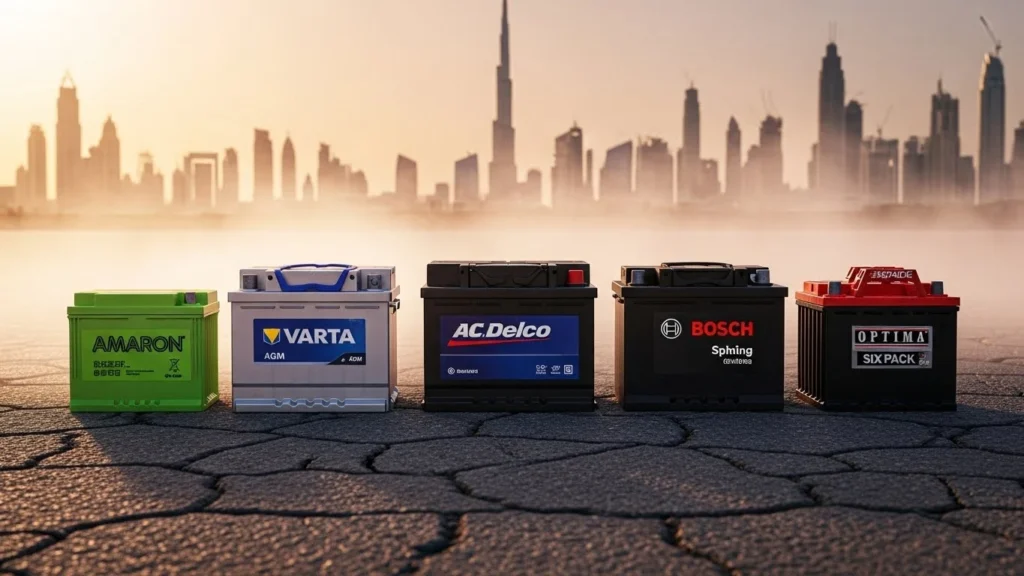
| Feature | Genuine OEM (Dealer) | Premium Aftermarket (e.g., Varta/Amaron) | Budget Aftermarket |
| Lifespan | 24 – 30 Months | 20 – 24 Months | 12 – 14 Months |
| Warranty | 12 Months | 12 – 18 Months | 6 – 12 Months |
| Heat Resistance | High | Very High (Silver Alloy) | Low |
| Price Point | AED 600 – 1,500 | AED 350 – 700 | AED 150 – 250 |
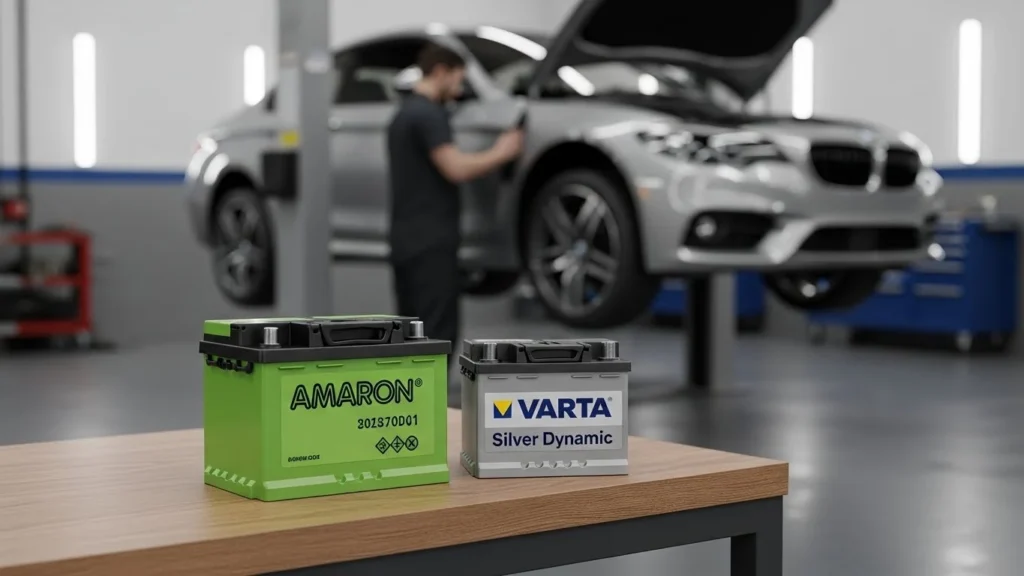
We generally recommend Amaron or Varta Silver Dynamic for Dubai drivers. These brands use a silver-calcium alloy that is specifically designed to handle the thermal cycles of the Middle East.
Case Study: The “Mystery” Drain in Al Barsha
Last August, a client brought in a 2022 Range Rover that was killing a new battery every 4 months. The owner was frustrated and ready to sell. Our head mechanic didn’t just swap the battery; he performed a “parasitic draw test.”
We discovered a faulty dashcam that wasn’t turning off, combined with a slight corrosion leak from the Jumeirah coastal air near the owner’s villa. By cleaning the ground points and re-wiring the camera, we saved the client thousands in potential dealer “repairs.”
Dubai Maintenance & Replacement Guide (2025 Estimates)
| Service Item | Recommended Interval | Estimated Cost (AED) |
| Battery Health Test | Every 6 Months | AED 50 – 100 (Free with Service) |
| Terminal Cleaning & Protection | Every 4 Months | AED 30 (DIY possible) |
| Standard Battery Replacement | Every 18 – 24 Months | AED 350 – 550 |
| AGM Battery (High-End/Start-Stop) | Every 30 Months | AED 850 – 1,400 |
15-Point Dubai Summer Battery Checklist
-
Park in the Shade: Use underground parking whenever possible to drop ambient heat by 15°C.
-
Window Tints: High-quality ceramic tinting reduces the cabin heat, meaning your AC doesn’t work as hard at startup.
-
Check the “Eye”: Many batteries have a built-in hydrometer. Green is good; Black means charge; Clear means replace.
-
Short Trip Warning: Avoid driving only 5 minutes to the grocery store. The battery needs at least 20 minutes to recharge what it lost during the start.
-
Terminal Tightness: Wiggle the cables. If they move, your charging is inefficient.
-
Insulation Blankets: Ensure your factory battery heat shield is still in place.
-
Drive Weekly: If you’re traveling, have a friend start the car for 20 minutes once a week.
-
AC First Rule: Turn off your AC and radio before you shut down the engine.
-
Belt Check: Ensure your fan belt (serpentine belt) is tight so the alternator spins correctly.
-
Water Levels: If you have a non-sealed battery, check the distilled water levels every month.
-
Voltage Test: A healthy battery should read 12.6V when off and 13.7V – 14.7V when running.
-
Clean the Case: Dust acts as a conductor. A dirty battery can actually “leak” power across the top of the casing.
-
Grounding Points: Check where the negative cable meets the car frame for rust.
-
Upgrade to AGM: If you do a lot of stop-and-go traffic on SZR, consider upgrading to an AGM battery.
-
Listen to the Starter: If it sounds “tired,” it’s usually the battery, not the starter motor.
RTA & Legal Compliance: The ‘Tajdeed’ Factor
In Dubai, your vehicle must pass a technical inspection for registration renewal (Tajdeed) if it is older than 3 years. A weak battery can actually cause you to fail the test.
How? A failing battery often causes the car’s computer to reset, which clears the “Emissions Readiness Monitors.” If the RTA examiner plugs in their computer and sees “Not Ready” status, they will fail the car even if it’s running fine. Always ensure your battery is healthy at least two weeks before your Tasjeel or Shamil appointment.
Final Insights from Our Head Mechanic
The Insider Secret: “Most people think the battery dies because of the heat in summer. That’s only half true. The heat damages the battery in July and August, but it’s the first ‘cool’ morning in November that actually kills it. When the temperature drops slightly, the chemical reaction slows down, and the already-damaged battery finally gives up. Don’t wait for the first cool day—test it in September!”
Get Your Car Summer-Ready Today
Don’t let the Dubai heat win. Whether you need a quick battery test or a full electrical scan, we are here to help. Our Al Quoz facility is equipped with the latest diagnostic tools to ensure you never get stranded.
Chat with us on WhatsApp or Call us directly at +971569371471. Your safety is our priority.
Frequently Asked Questions
1. Why did my battery die after only 1 year?
In Dubai, 12 months is early but not unheard of, especially if the car is parked in direct sunlight or used for very short trips. High-vibration driving or a faulty alternator can also shorten life.
2. Can I use a battery from a different brand?
Yes, as long as the Group Size (physical dimensions) and CCA (Cold Cranking Amps) meet or exceed your car’s original specifications.
3. Does car insurance cover a dead battery?
Standard insurance usually doesn’t, but many UAE policies include “Roadside Assistance” which will provide a free jumpstart or recovery to a garage.
4. Is it safe to jumpstart a modern luxury car?
It can be risky. Modern ECUs are sensitive to power surges. Always connect the cables in the correct order or use a portable power bank with surge protection.
5. How much does a mobile battery replacement cost in Dubai?
Expect to pay a premium of AED 50-150 on top of the battery price for the convenience of home or roadside installation.
6. Does the humidity in Dubai Marina affect my battery?
Yes. High humidity and salt air accelerate terminal corrosion, which leads to poor charging and premature failure.
7. Should I buy a maintenance-free battery?
In the UAE, sealed “Maintenance Free” (MF) batteries are the standard. They prevent the electrolyte evaporation that kills traditional batteries in this heat.
8. Why does my battery light stay on after a change?
This usually means your alternator is failing or the new battery needs to be “registered” to the car’s computer system using a professional scanner.