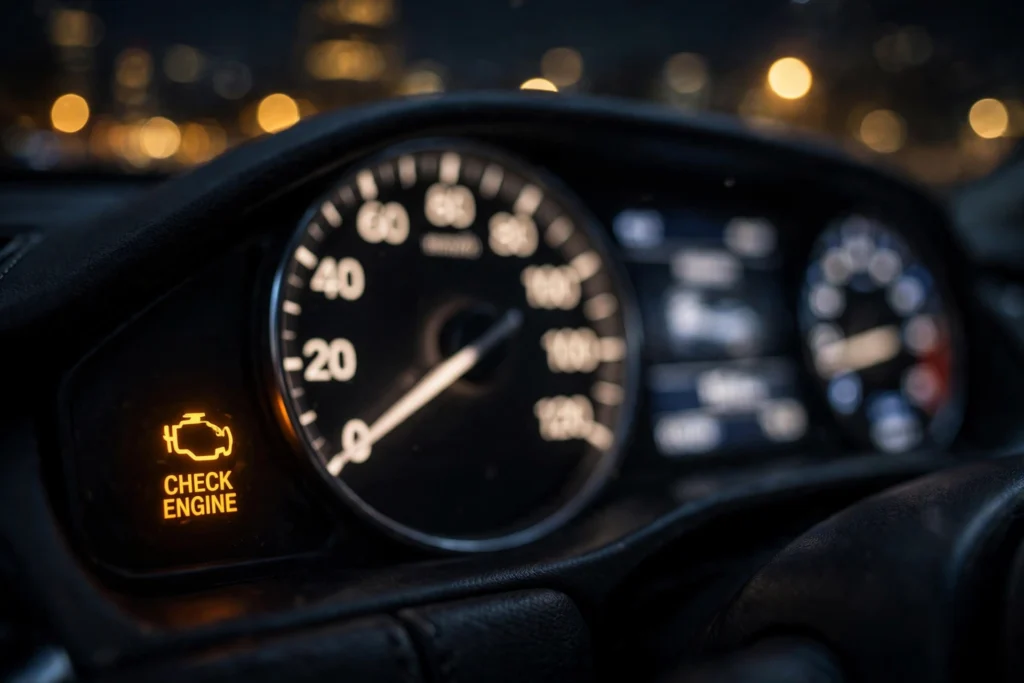
That small orange engine symbol lights up on your dashboard and your heart skips a beat. If the check engine light has just appeared in your car in Dubai, this guide is for you. It is one of the most common dashboard warnings, and also one of the most misunderstood. It does not always mean your engine is about to fail. It means your car’s computer has noticed something outside the normal range. Below we explain what the light means, the common causes we see in Dubai, the simple checks you can do yourself, and when you need workshop help.
What the Check Engine Light Actually Means
Modern cars are full of sensors that watch the engine, the fuel system and the exhaust every second you drive. When a reading falls outside the normal range, the car’s computer stores a trouble code and turns on the check engine light.
The light is only a messenger. The same warning can be triggered by a fuel cap that is not tightened properly or by a failing sensor. Guessing and replacing parts is a bad idea. The right approach is to read the stored code first, then diagnose the cause.
Steady Light vs Flashing Light: Know the Difference
How the light behaves matters more than most drivers realize. It tells you how urgent the problem is.
A steady, glowing light means there is a fault, but it is not an immediate emergency. You can keep driving to your destination, but get the car checked soon. Many steady light issues are things like a sensor reading that is slightly off or a small leak in the fuel vapor system. They will not leave you stranded today, but leaving them for weeks can turn a small problem into a bigger one.
A flashing or blinking light is a different story. A flashing check engine light almost always means the engine is misfiring. Unburned fuel is reaching the hot exhaust system, and that can damage expensive parts very quickly. If the light is flashing, reduce your speed, avoid hard acceleration, and get to a workshop as soon as you safely can. Keep driving normally with a flashing light and you risk serious damage.
So the first rule is simple. Steady light, drive carefully and book a check soon. Flashing light, treat it as urgent. If you are unsure, call a workshop and describe what you see.
7 Common Reasons the Check Engine Light Comes On in Dubai
These are the causes we see most often in cars driving in the UAE. Some are simple. Some need proper diagnosis.
1. A Loose or Damaged Fuel Cap
The fuel system is sealed, and a loose fuel cap lets fuel vapors escape. The computer notices this and turns on the light. In Dubai’s heat, the rubber seal on the cap also wears out faster. If your check engine light just came on and you recently filled up, tighten the cap until it clicks and drive for a day or two. In many cases the light goes off by itself once the system is sealed again. If the cap seal is cracked or the cap does not click anymore, it needs replacing.
2. Worn Spark Plugs or Faulty Ignition Coils
Spark plugs create the spark that burns the fuel in each cylinder. When they wear out, the engine misfires, especially on acceleration or cold starts. Heat and dust in Dubai shorten spark plug life, and worn plugs are a common cause of a flashing check engine light. Ignition coils, which feed power to the spark plugs, can fail the same way. Misfiring feels like the car is stumbling or jerking.
3. A Failing Oxygen Sensor
Oxygen sensors sit in the exhaust and measure how much unburned oxygen is in the exhaust gases. The computer uses this to adjust the fuel mixture. When a sensor fails, the mixture goes wrong and fuel consumption rises. This is very common on cars with higher mileage. The car will usually still drive normally, but it burns more fuel than it should.
4. A Dirty Mass Airflow Sensor
The mass airflow sensor measures how much air is entering the engine so the computer can add the right amount of fuel. Dust is the enemy here, and Dubai has plenty of it. Fine dust can coat the sensor’s delicate wire over time, and the readings drift off. Symptoms include rough idling, hesitation when you press the accelerator, and the check engine light. Sometimes a professional cleaning fixes it. Sometimes the sensor has reached the end of its life and needs replacing.
5. A Failing Catalytic Converter
The catalytic converter cleans the exhaust gases before they leave the car. It is a hardworking part, and it does not last forever. Short trips where the engine never fully warms up, ignored misfires and contaminated fuel can all shorten its life. When it fails, you may notice a sulfur smell from the exhaust, a loss of power, and the warning light.
6. A Leak in the EVAP System
EVAP stands for the system that captures fuel vapors from the tank and feeds them back into the engine. It is a closed system, and any leak, however small, triggers the light. These leaks are usually invisible, and finding them takes a smoke test that pressurizes the system and shows exactly where vapor escapes.
7. A Weak Battery or Charging Problem
Modern cars are sensitive to voltage. When the battery is weak or the charging system is not delivering steady power, sensors can send strange readings to the computer, and false or confusing trouble codes appear. If your check engine light comes on along with slow cranking or dim lights, the battery and alternator should be tested before anything else. Fixing the power supply first can clear codes that looked like sensor failures.
Simple Checks You Can Do Yourself
Before booking a diagnosis, work through these checks. They take only a few minutes and they solve a surprising number of check engine light cases:
- Tighten the fuel cap. Remove it, put it back, and tighten until it clicks. Drive normally for a day or two and watch the light.
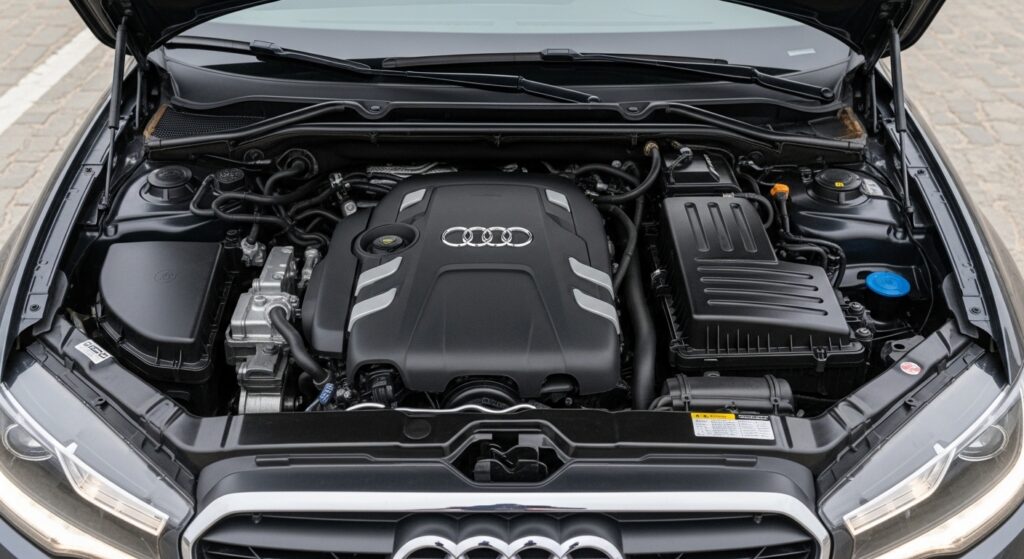
- Look under the bonnet. Check for loose or cracked hoses, disconnected plugs, or anything that looks out of place. Do this only with the engine off and cool.
- Watch how the light behaves. Steady or flashing? Write it down. This detail helps any technician a lot.
- Notice the symptoms. Is the car idling rough, jerking, losing power, or using more fuel? Note when it happens, such as on cold starts or during acceleration.
- Check the battery terminals. Corrosion or loose clamps cause voltage problems that trigger false codes. Clean and tighten them if needed.
- Do not keep clearing the code. Some drivers use a cheap scanner to erase the light and hope it stays off. The code will come back if the fault is still there, and erasing it also deletes data the technician needs to find the real cause.
When You Should Stop Driving and Get Help
Most steady light issues can wait a day or two for a proper appointment. But stop driving and get help if you notice any of these: the light is flashing, the engine is shaking badly or has lost most of its power, there is smoke or a strong burning smell, the temperature gauge is climbing into the red, or you hear loud knocking or banging from the engine. These are signs of damage happening right now, and every kilometer you drive can make the repair bigger. Pull over safely, switch off, and call for assistance.
What a Proper Workshop Diagnosis Looks Like
A proper diagnosis starts with reading the stored trouble codes with a professional scanner, but it does not end there. The code only points to a system, not to the exact faulty part. A good technician reads the code, checks live data from the sensors while the engine runs, inspects the related components, and tests before replacing anything. This step by step approach is what separates a real diagnosis from guesswork. For background on how on board diagnostics work, see the check engine light overview on Wikipedia.
Why does this matter? Because the same code can have different causes in different cars. An oxygen sensor code can mean the sensor is dead, or a leaking exhaust is fooling a healthy sensor, or a wiring problem is breaking the signal. Replacing the sensor without testing wastes time and leaves the real fault in place. A proper diagnostic test finds the cause first, so only the part that is actually faulty gets replaced.

You can read about our approach on our engine diagnostics service page. The goal is always the same: find the real cause, fix it once, and get you back on the road with confidence.
Get Your Check Engine Light Checked in Dubai
If the check engine light is on in your car, do not guess and do not ignore it. Bring your car to Expert Car Repair Dubai for a proper diagnosis. We read the trouble codes, test the related systems, and fix the actual cause. Our full range of services is listed on our car repair in Dubai page. Call or WhatsApp +971 56 937 1471 or message us on WhatsApp. Our workshop is at Binghatti Stars Building, Dubai Silicon Oasis, Opposite Lulu Hypermarket, Dubai, UAE.
Frequently Asked Questions
Can I still drive my car with the check engine light on?
If the light is steady and the car drives normally, you can drive to your destination and then get it checked soon. If the light is flashing, the engine is shaking, or there is smoke or a strong smell, pull over safely and call for help instead of continuing.
Will the check engine light go off by itself?
Sometimes, yes. If the cause was a loose fuel cap that you tightened, the light often goes off after a day or two of normal driving. But most faults stay in the system until they are fixed. If the light does not go off within a couple of days, the car needs a proper diagnosis.
Can a loose fuel cap really trigger the check engine light?
Yes, it is one of the most common causes. The fuel system must stay sealed so vapors do not escape. A loose cap, or a cap with a worn seal, breaks that seal and the computer turns on the light. Tighten the cap until it clicks and give it a day or two before assuming something worse.
Is it safe to clear the code with a scanner and keep driving?
Clearing the code turns off the light but does not fix anything. The code will return if the fault is still there, and clearing also wipes data that helps a technician find the real cause. It is always better to diagnose the fault properly than to erase the warning.
Why does my check engine light come on in hot weather in Dubai?
Heat speeds up wear on rubber seals, hoses and sensors, and it stresses the battery and charging system. Dust can also coat sensitive sensors like the mass airflow sensor. That is why we see more check engine light cases during the hottest months. Regular maintenance catches these parts before they fail.