
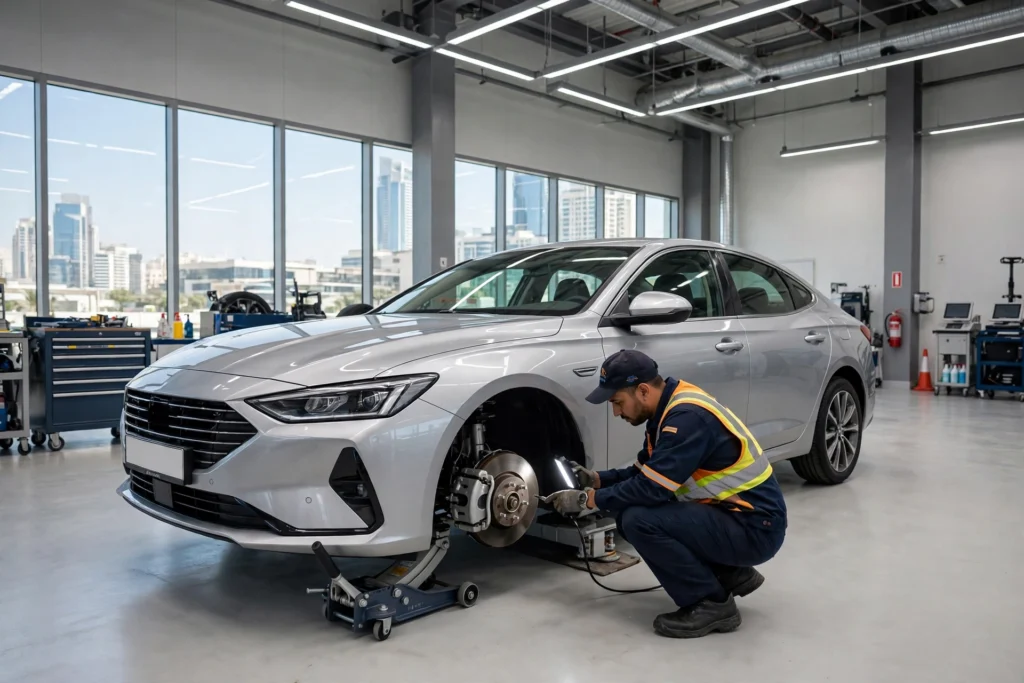
RTA vehicle testing Dubai is the official technical inspection your car must pass before you can renew its registration. Many drivers find the test stressful, mainly because they do not know what will be checked. In reality the test follows a clear list, and most failures come from small problems that are easy to spot in advance. This guide explains what inspectors check, what documents to take, and the simple checks you can do at home so you have the best chance of passing the first time.
What RTA Vehicle Testing Is
Vehicle testing is a road safety inspection at an RTA authorised testing centre. Inspectors check that your car is safe to drive and meets the technical standards for Dubai roads. The inspection covers brakes, steering, suspension, tyres, lights, glass, seat belts, exhaust emissions, and the general condition of the body and chassis. It also checks for fluid leaks and other defects that could make the car unsafe.
The test is not a service visit, and inspectors do not fix problems on the spot. They record what they find and give a pass or fail result. A pass lets you complete your registration renewal, while a fail report lists exactly what needs attention before you return.
You can read the current rules on the RTA technical inspection service details page.
When Do You Need a Vehicle Test?
Most private cars in Dubai need a technical inspection each year as part of registration renewal, once the vehicle is past its new car period. If you are the first owner of a new vehicle with no mileage, the vehicle is exempt for three years from the year of manufacture or the year of registration, whichever comes first. After that, the yearly test becomes part of renewal.
A test may also be needed in other situations, such as certain ownership transfers. If you are unsure whether your car needs a test this year, check its status through the RTA channels before you book.
For registration, renewal, and export with plates, book through the RTA website or the RTA Dubai app. A retest follows a different booking rule, and some groups and centres are exempt, so check the current rule for your centre before you travel.
What Inspectors Check During the Test
The inspection follows a checklist, and there are no surprise items. The main areas are:
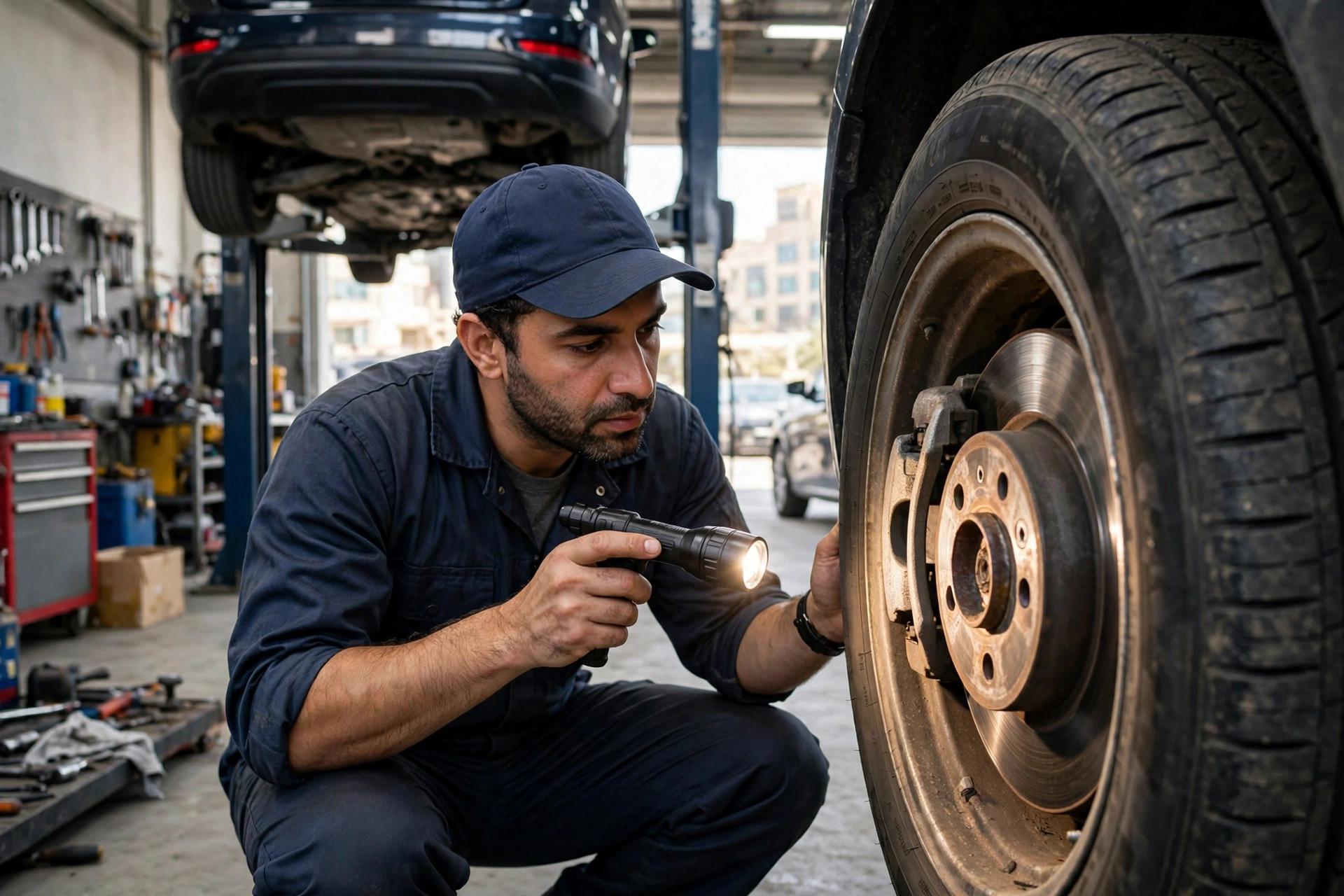
- Brakes: braking performance, balance between left and right, the parking brake, discs, pads, and fluid leaks.
- Tyres and wheels: tread depth and condition, cuts, bulges, damage, correct tyre size, and wheel condition.
- Lights and electrics: headlights, tail lights, brake lights, indicators, reverse lights, hazard lights, horn, and headlight aim.
- Steering and suspension: steering play and response, worn joints and bushes, shock absorbers, and springs.
- Glass, mirrors, and wipers: windscreen cracks and chips in the driver view, side windows, mirrors, wipers, and washers.
- Seat belts: every belt must be present, must lock correctly, and must retract and release as designed.
- Exhaust and emissions: exhaust condition and leaks, smoke levels, and emissions readings for your fuel type.
- Body, chassis, and leaks: chassis number and plate condition, safety related body damage, and any oil, coolant, or fuel leak.
A workshop checks all of these during a normal inspection.
Documents to Take With You
Take these documents in one folder:
- Your original Emirates ID
- Your vehicle registration card, known as the Mulkiya
- A valid motor insurance certificate for the vehicle
- Your driving licence
- The previous test report, if you are returning for a retest
- Any approval papers for modifications, if your car has been modified
If someone else is taking the car for you, they may need extra authorisation papers, so check this before test day. Check the documents the night before, not in the testing centre car park.
Common Reasons Cars Fail the Test
Most failures are small items the driver had not noticed:
- A brake light, indicator, or headlight bulb that has stopped working
- Worn brake pads or uneven braking
- Tyres with low tread, a cut, a bulge, or uneven wear
- A cracked windscreen in the driver line of sight
- Worn wiper blades that leave streaks across the glass
- A horn that does not work
- A seat belt that does not lock or retract properly
- An exhaust leak or high emissions reading
- A visible fluid leak under the car
- A number plate that is damaged or hard to read
A ten minute walk around the car at home can catch most of these before an inspector does.
What You Can Check Yourself Before the Test
You do not need tools for the checks below. Do them in daylight, a day or two before the test.
Lights and Horn
Switch on the headlights, tail lights, indicators, hazard lights, brake lights, and reverse lights, and walk around the car while someone presses the brake pedal and works the indicators. Look for any bulb that is out, dim, or flickering, and check that the headlight lenses are clean. Press the horn and listen for a clear sound. A single failed bulb is one of the simplest causes of a failed test.
Tyres and Wheels
Look at every tyre for cuts, bulges, cracks, and objects stuck in the tread. Check the tread wear indicators. If the tread has worn down to their level, the tyre is at the end of its safe life. Check the tyre pressure using the figure on the driver door sticker or in the owner manual, when the tyres are cold.
Brakes
Pay attention to how the brakes feel on a short, safe drive. Note any grinding, lasting squealing, vibration through the pedal, or pulling to one side when you brake. Check the parking brake on a gentle slope and make sure the car holds still. If anything feels wrong, have the brakes inspected before the test. Our guide to car brakes squealing in Dubai explains which brake noises need quick attention.
Glass, Wipers, and Mirrors
Clean the windscreen, then look for chips and cracks in front of the driver. A crack across the driver view is a common fail item. Run the washers and wipers and watch for streaks or torn rubber on the blades. Check that every mirror is present, clean, and adjustable.
Fluids and Leaks
Look under the car where it is normally parked. A fresh patch of fluid under the car is worth investigating before the test. Check the engine oil, coolant, brake fluid, and washer fluid levels, and top them up only to the correct marks if they are low. Never open a hot cooling system. If a level keeps dropping, that points to a leak that should be found before the test.
Dashboard Warning Lights
Start the car and watch the dashboard. Warning lights should come on briefly and then go out once the engine is running. A warning light that stays on, such as an engine, brake, airbag, or tyre pressure warning, should be investigated before the test. A warning light often points to a fault that also affects another test item.
What Happens on Test Day
Arrive with your documents ready and the car clean, so inspectors can see the lights, plates, and body. At the centre, hand over the documents while inspectors work through the checklist above. When the inspection is finished you will receive the result. If the car passes, keep the result safe and complete your renewal through the normal RTA channels. If it fails, the report will list each failed item so you know exactly what to fix.
If Your Car Fails the Test
A failed test is frustrating, but it is not the end of the process. Fix every item on the fail report, not just the first one. A car that returns with one item still unfixed will fail again on that item. Keep the report, and return for a retest once the work is done.
If you believe a result is wrong, the RTA allows you to appeal to the Technical Inspection Committee through the vehicle registration and inspection centres. You or your legal representative must attend in person, and the decision is given after a short review period. The decision is final until you submit a new request after fixing all the issues, so use an appeal only when you have a clear reason to question the result.
A Workshop Check Before the Test Can Save a Second Trip
A short workshop inspection covers everything in this guide, plus brake measurements, suspension wear, and emissions readings you cannot check at home. A technician can spot a worn bush, a weak shock absorber, or a small leak. That check is especially useful for older cars and cars showing any warning light.
A regular car maintenance service in Dubai also keeps the test items in good shape through the year. If your car is due for a service and a test in the same month, do the service first. Our guide to a car service schedule in Dubai explains how to time services and renewals together. For brake concerns, a car brake repair check in Dubai before the test can catch worn pads and discs early.
Frequently Asked Questions
Do new cars in Dubai need RTA vehicle testing?
If you are the first owner of a new vehicle with no mileage, the vehicle is exempt for three years from the year of manufacture or the year of registration, whichever comes first. After that, the yearly test becomes part of renewal. Check your vehicle status through the RTA channels if you are unsure.
What documents do I need for RTA vehicle testing in Dubai?
Take your original Emirates ID, your vehicle registration card (Mulkiya), a valid motor insurance certificate, and your driving licence. Also take the previous test report for a retest, and any approval papers for modifications. Missing documents can delay the visit even when the car is in good shape.
What are the most common reasons for failing the RTA test?
The most common reasons are small items: a failed bulb, worn brake pads, tyres with low tread or damage, a cracked windscreen in the driver view, worn wiper blades, a horn that does not work, a faulty seat belt, an exhaust leak, or a fluid leak. A short check at home catches most of these before test day.
What happens if my car fails the RTA vehicle test?
You will receive a report listing each failed item. Fix every listed item, keep the report, and return for a retest once the work is done. You can also appeal to the Technical Inspection Committee if you have a clear reason to question the result.
Should I get a workshop check before the RTA test?
A workshop check is a sensible step, especially for older cars or cars showing a warning light. A technician can measure the brakes, check suspension wear, test emissions, and spot leaks that are hard to see at home. Doing the check before the test reduces the chance of a second visit.
If your test is coming up, call or WhatsApp Expert Car Repair Dubai on +971 56 937 1471 or message us on WhatsApp. Our workshop is at the Binghatti Stars Building, Dubai Silicon Oasis, opposite Lulu Hypermarket, Dubai, UAE. We will check the brakes, tyres, lights, glass, fluids, and warning lights, and tell you clearly what needs attention before your test.