A flat battery always picks the worst moment: a school run, a meeting, a flight to catch. Jump starting is simple when it is done in the right order, and risky when it is not, because modern cars are full of electronics that hate voltage spikes. This guide gives the safe step-by-step method, the mistakes that damage cars, and the signs that your battery needs more than a jump.
If you would rather not do it yourself, or the car still will not start, call or WhatsApp Expert Car Repair Dubai on +971 56 937 1471.
Before You Start: Safety Checks
- Look at the battery. If the case is swollen, cracked, or leaking, do not jump start it. That battery needs replacing.
- Smell. A strong rotten-egg smell around the battery means it is damaged or overcharged. Do not jump it.
- Check the terminals. Heavy white or green corrosion can block the connection. The clamps need clean metal to grip.
- Know your car. Some cars, especially hybrids and newer European models, have a dedicated jump start terminal under the bonnet because the battery sits in the boot. Your owner’s manual shows where it is. Use that terminal, not a random bolt.
How to Jump Start Your Car Safely: Step by Step
You need a second car with a healthy battery, or a jump starter pack, and a set of jumper cables.
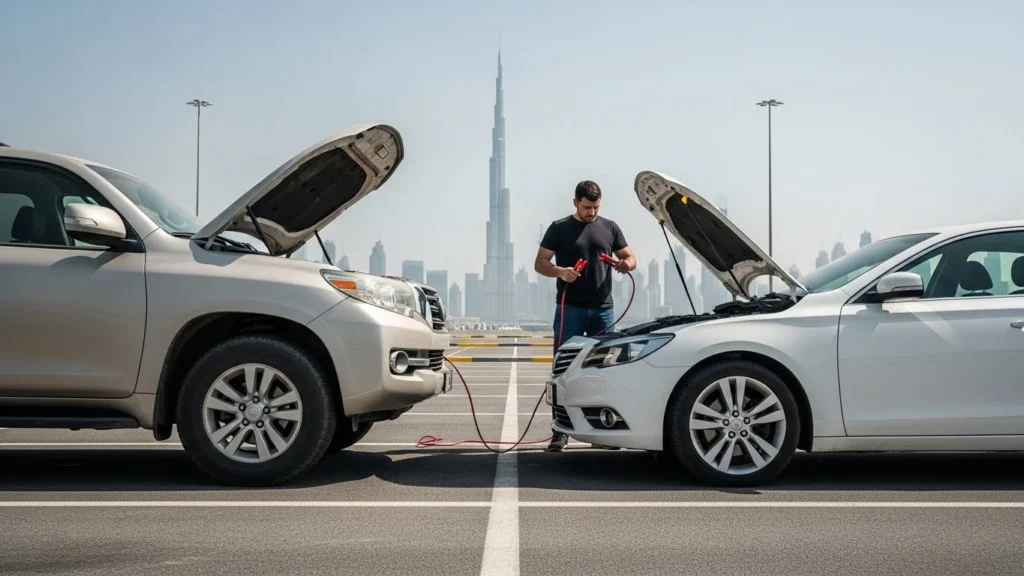
- Park the cars close, bonnets facing if possible. Both engines off, keys out, everything electrical switched off in both cars.
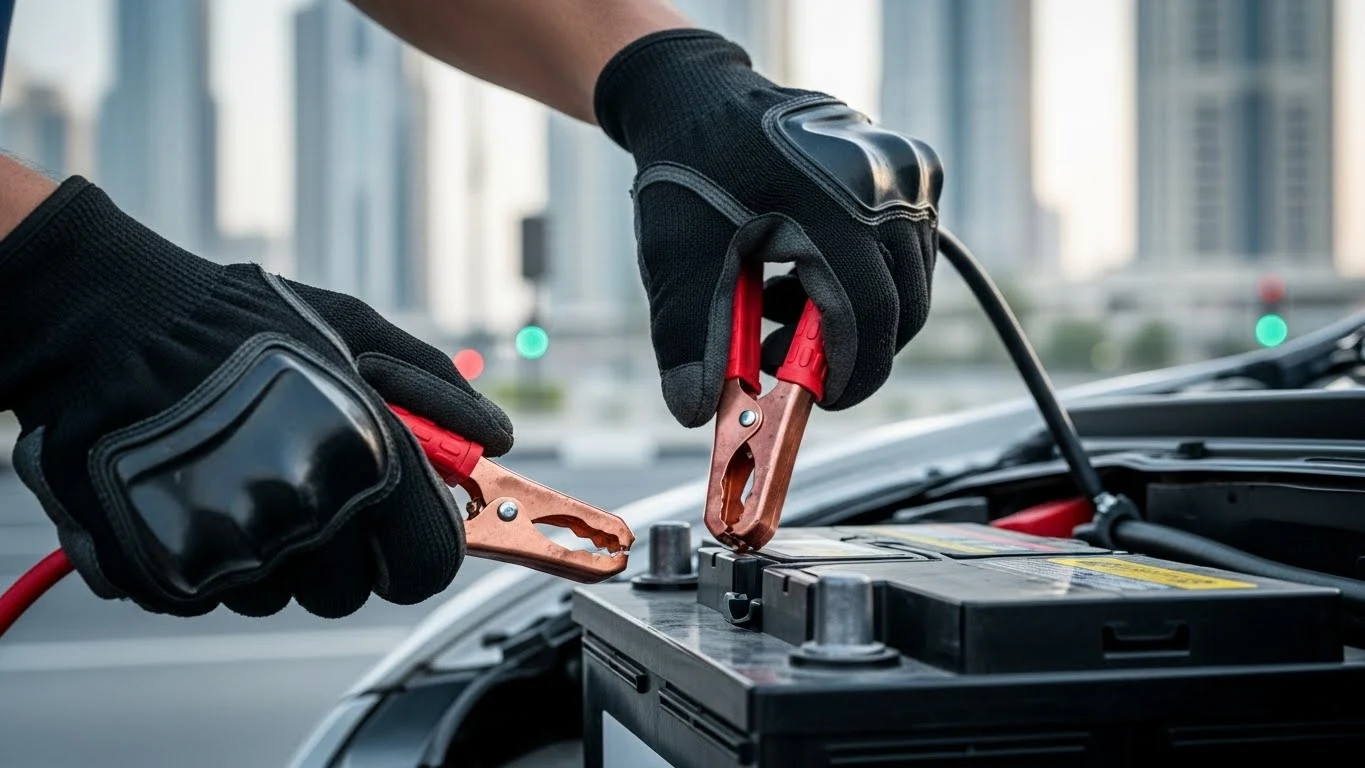
- Connect the red cable to the flat battery’s positive terminal (marked + , usually with a red cover).
- Connect the other end of the red cable to the good battery’s positive terminal.
- Connect the black cable to the good battery’s negative terminal (marked −).
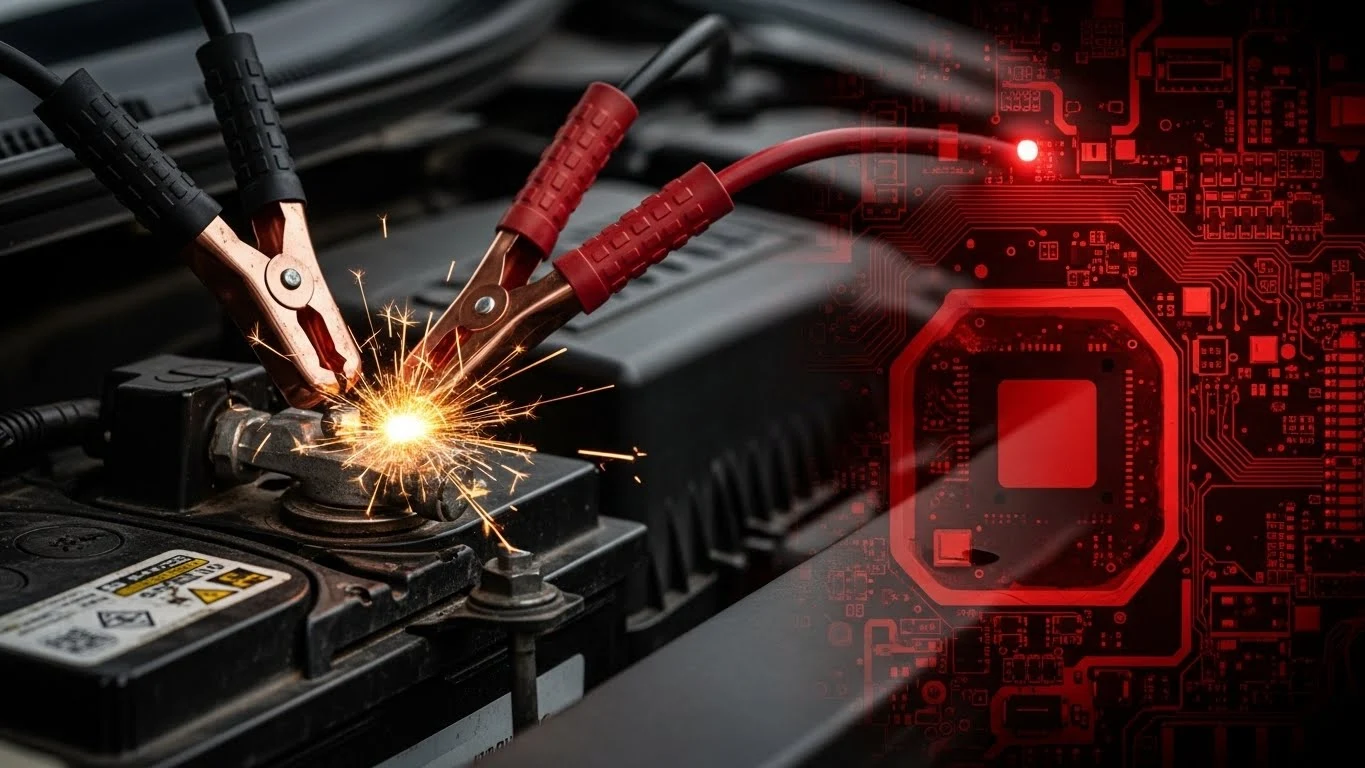
- Connect the other end of the black cable to a solid metal point on the flat car’s engine, away from the battery: a bracket or unpainted bolt. This is the step people get wrong, and it matters, because the final connection can spark, and sparks should stay away from the battery.
- Start the good car and let it run for a few minutes.
- Start the flat car. If it does not start, wait a few more minutes and try again. If it only clicks, stop and read the section below.
- Remove the cables in the exact reverse order: black from the engine metal point, black from the good battery, red from the good battery, red from the flat battery.
- Drive the jumped car for at least 20 to 30 minutes to put some charge back. Then get the battery tested the same day.
Mistakes That Damage Modern Cars
- Reversing the cables. Positive to negative, even for a second, can destroy control units, the alternator, and fuses. This is the expensive mistake. Double-check every connection before the last one is made.
- Connecting the black cable straight to the flat battery’s negative terminal. It often works, but the spark it makes happens right at the battery, which can vent flammable gas. Use the engine metal point instead.
- Jumping a car again and again. If a battery needs a second jump within days, the problem is the battery or the charging system, not your luck. Repeated jumps strain the alternator too.
- Using thin, cheap cables on a big engine. Weak cables overheat and deliver too little current, especially for larger engines and diesels.
- Revving the good car hard. It does not help and can spike the voltage. Idle is enough.
If It Still Will Not Start
Clicking with no cranking after a proper jump usually means the battery is too far gone, the terminals are not conducting, or the starter motor is the real fault. A single loud click can point to the starter. No lights at all on the dashboard points back to the battery or its connections. Guessing between these costs money; a quick test separates them. Our car battery replacement team tests the battery, alternator, and starter together, so the real fault is fixed first time.
After the Jump: The Battery Is Not Saved Yet
A jump start gets you moving; it does not repair the battery. Batteries that have gone flat are often already weakened, and Dubai heat finishes them quickly. Get the battery tested the same day, and read our guide on how long car batteries last in Dubai to know where yours stands. If the test says the battery is healthy, then the question becomes why it went flat: lights left on is the kind answer; a hidden electrical drain is the other one, and that needs a proper check.
Call or WhatsApp: +971 56 937 1471 | WhatsApp Us
Frequently Asked Questions
What order do jumper cables go on?
Red to the flat battery’s positive, red to the good battery’s positive, black to the good battery’s negative, and black last to a metal point on the flat car’s engine, away from the battery. Remove them in the exact reverse order. The order keeps sparks away from the battery and protects the electronics.
Can jump starting damage my car’s electronics?
Done correctly, it is safe. Done wrong, yes: reversed cables are the main cause of blown control units and alternators. Voltage spikes from poor connections are the other risk. Take your time with the connections, and never rush the order.
How long should I drive after a jump start?
At least 20 to 30 minutes of steady driving to return some charge to the battery. Short trips will not do it. Even after a good drive, get the battery tested the same day, because a battery that needed a jump is often near the end of its life.
Why does my car click but not start even with jumper cables?
Usually the battery is too discharged or damaged to accept the jump, the clamps are not making clean contact, or the starter motor has failed. Clean and re-seat the clamps and try once more. If it still only clicks, the car needs testing rather than more attempts.
Is it safe to jump start a car in Dubai summer heat?
Yes, with the same steps. Work in shade if you can, and be extra careful with the safety checks: heat swells and damages batteries, and a swollen or leaking battery should never be jump started. If the battery looks or smells wrong, call for help instead.